Club
08 October 2026
New story, same legend!
 OL Lyonnes

News
Club
12 January 2026
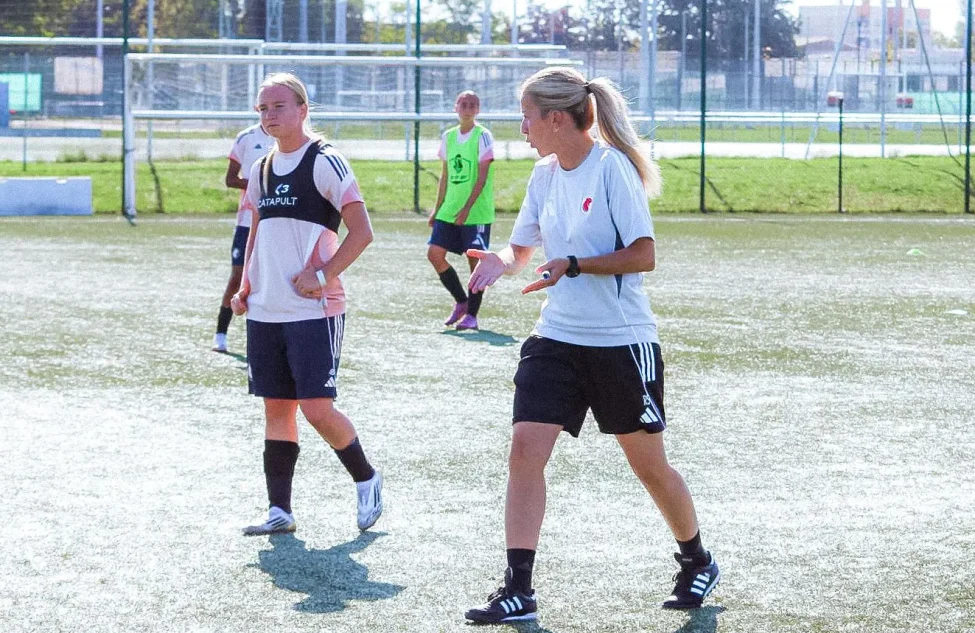
Read an interview with the director of recruitment strategy and also U19 coach, Rachel Saïdi.
“My journey began as a player. I started playing football in mixed teams before progressing to the second and then first divisions, in both amateur and professional clubs. I finished my playing career in Lille, where I also began my transition to coaching. Internationally, I earned a few caps with the French B team and participated in two European University Championships as well as a University World Cup.
After my playing career, I turned to coaching, initially in amateur football and youth categories, notably at FCF, then at the Liévin Youth Academy and the Amateur Football Academy, always within women’s football. In Lille, I held the position of sports coordinator for all the women’s teams for ten years. During the 2018-2019 season, while I was still playing, the club entrusted me with the first team. I hold a DES (Diploma of Higher Studies in Coaching). I was ready to take on this challenge. It was at that moment that my career as a top-level coach truly began. I then coached Lille for five seasons, between the Second and First Leagues, in a sometimes difficult context, marked in particular by relegation and a complete rebuild of the squad. Demanding experiences, but particularly formative for the rest of my career.”
“At the end of my time in Lille, I felt the need to take a break. I had a year left on my contract, but I asked to be released in order to take a step back. So I became a consultant for the French Football Federation and for Canal+, covering the Premier League championship. This role allowed me to look at football differently, with more distance. I was able to follow the players’ development, analyze the leagues, tactical trends, especially on set pieces, and enjoy myself without the pressure of results.”
“Yes, clearly. Being in the position of observing, taking a step back, and not directly involved in the match, allowed me to refine my perspective. I spent more time analyzing the collective play, but also monitoring the individual players. During this period, I implemented precise tracking charts to observe the progress of the players and the teams. This allowed me to better understand certain strategies, to enrich myself tactically, while rediscovering a form of enjoyment in watching the game without pressure.”
“This is a project I was already familiar with, as I had managed a training program in Lille, albeit in a less ambitious context. Here, we’re talking about one of the best European clubs, with a solid structure, a clear working framework, and very high daily standards. What particularly appealed to me was this positive pressure: training as many players as possible to join the first team while also striving for collective performance. We need to succeed in developing the individual, but also perform every weekend and win titles, in order to pass on this winning culture to our young players. A culture that the professional team has embodied for many years.”
“It was a strong desire of mine to have this dual role. Being on the ground every day allows me to be at the heart of the project, to experience the methodology firsthand, to closely monitor the players’ progress, and to see how they assimilate the principles of the playing model. As director, it’s essential to master your subject, and that requires a daily presence on the field. This allows me to convey clear messages, but also to take ownership of the existing system. When I arrived, I wasn’t there to revolutionize everything, as an interesting methodology was already in place. My objective was rather to bring a fresh perspective and gradual adjustments, informed by my experience. Working daily with the U19s allows me to understand the individual development path, the club’s operations, and to implement appropriate adjustments.”
“Our support program is based on the four main areas of performance: tactical, technical, physical, and mental. The mental aspect is fundamental. It’s about enabling the players to handle the workload, maintain a high level of performance, understand the game plan, and be receptive to what is asked of them. It’s also important to provide them with mental balance, with periods of recovery and disconnection, so they arrive on the pitch refreshed. At the highest level, it’s largely a mental game. We also work extensively with the coaching staff. This season, we’re fortunate to have a full-time mental coach, in addition to the existing staff. This is a real asset, one that few clubs possess. Finally, close ties with the professional team are essential. The first-team coach is very open and close to the academy, which allows us to ensure continuity in the project, from entry into the U10 category all the way to the professional level.”
“The objective is clear: to win the championship. We fully embrace this, despite a very young squad compared to our opponents. To give you an example, against Albi, we had almost nine years of difference in average age, which is considerable. This choice allows our U18, U19 and U20 players to face the national senior level very early on, with different playing challenges than those of the U19 championship. It is extremely formative and enriching for their football culture.”
“We made the choice to field 16 or 17-year-old players in the U19 national league, which represents a risk every weekend. Despite this, we are performing well, proof of the quality of the group. We have managed to establish a strong collective dynamic, while working individually on the development of the players. This season, we have also gained in the variety of our play: collective control, positional play, but also quick transitions thanks to the qualities of our attacking players. There are still adjustments to be made, particularly on the defensive side, but the players are intelligent, attentive, and very pleasant to work with on a daily basis.”
“The message is clear: this is a shared objective. We have 47 players committed every day to winning three titles: the reserve championship, the U19 championship, and the Nike U18 Cup. We work with a unified approach across the coaching staff, with regular communication to share common playing strategies. The second half of the season will be demanding, with high-stakes matches, but this pressure is positive and essential for the development of our young players. We must continue to raise the bar, because at the highest level, the game is all about the details. Significant work is being done on emotional management, particularly with the mental coach, to prepare the players for these high-pressure situations.”
“The main strength of this group is its collective dynamic. Despite strong individual projects, notably the goal of signing professional contracts, there is real cohesion and very little individualism. This allows us to remain at the top of the league. There is also real individual quality, with several players who train regularly with the professional team. The playing style is clear, which allows the players to fully express themselves. On the other hand, we still need to improve in managing match scenarios, gaining maturity and the “cunning” specific to the senior level. This involves playing tough matches, but also training sessions with the professionals and experienced players.”
“I would tell them to come and watch both the professional team and the academy teams play. To come and have fun. And for those who are hesitant to get involved, I encourage them to take the plunge: today, many clubs are able to welcome all young female players. Football is an immense source of pleasure. Even if high standards and performance are at the heart of our project, the notion of enjoyment remains fundamental. That’s what we see every day in training: smiling, committed players who fully experience the emotions of the game.”

Newsletter
Follow all the latest news about OL Lyonnes!